
PART 3
I took a breath.
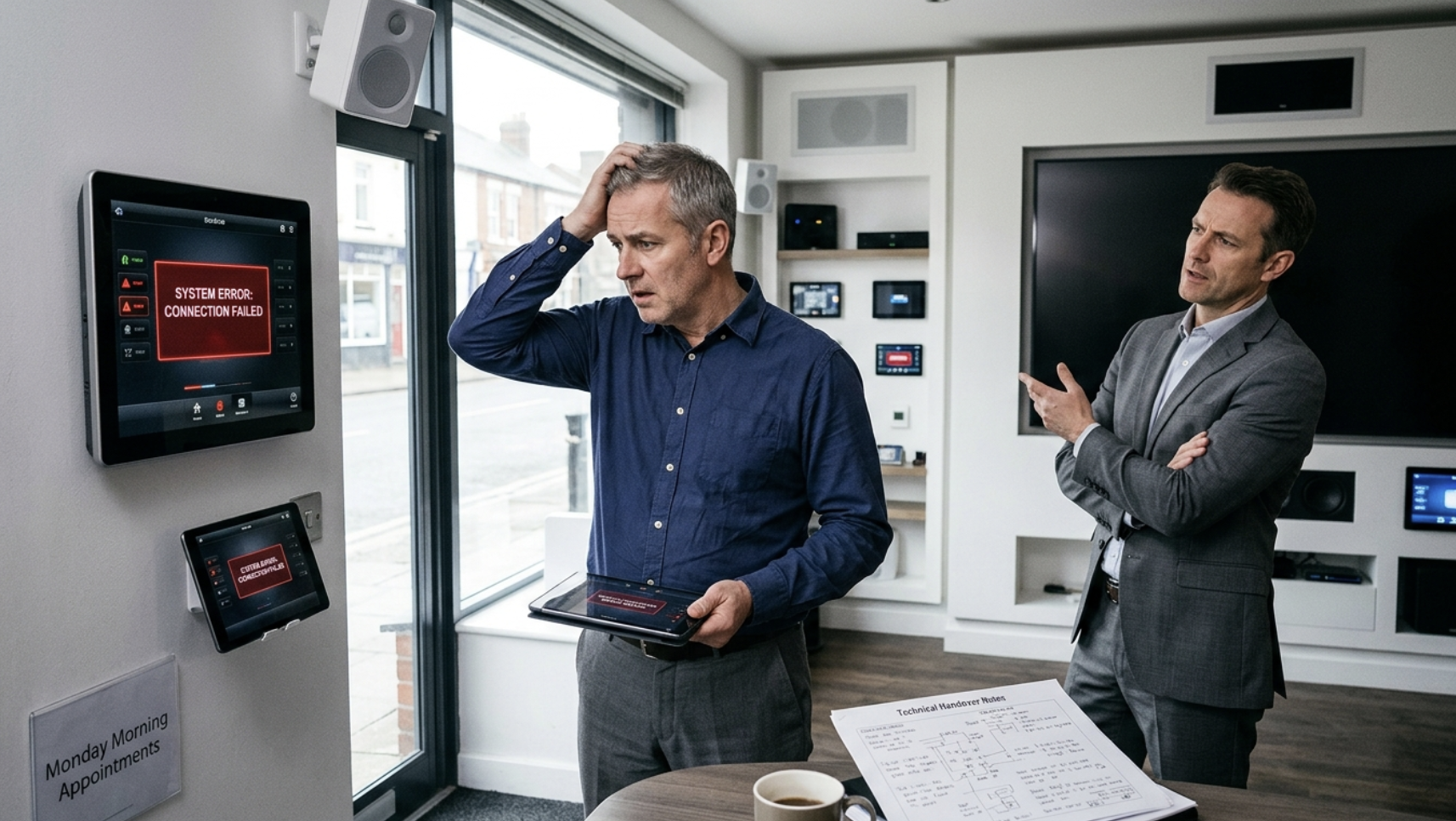
“That’s the advanced layer.”
“You did this.”
“No.”
“You deliberately shut it down.”
“No. I separated my professional subscription from your company equipment after giving you written notice and a complete migration package.”
Silence.
Then:
“You had no right.”
“I paid for that subscription.”
“You worked for me.”
“I worked for the company without a contract.”
“You’re my daughter.”
“That doesn’t make my professional accounts company property.”
Dad’s breathing became heavier.
“You’re going to fix it.”
“No.”
“Erin.”
“I already gave you the instructions.”
“I don’t have time to read instructions.”
“Then you need an engineer.”
“We have an engineer.” I almost laughed.
“Dad, Nolan is in sales.”
“He knows enough.”
“No. He doesn’t.”
That silence was longer.
Then Dad said something I had never expected.
“Please.” I closed my eyes.
There it was.
The word I had waited years to hear.
Not from pride.
Not from love.
From desperation.
And strangely, it didn’t feel satisfying.
It felt sad.
“You have a client there,” I said. “You need to be honest with them.”
“You’re going to embarrass me?”
“You did that yourself.”
“Erin—”
“I gave you three days.”
“You knew this would happen.”
“I knew you needed a commercial license.”
“You could have stayed and handled it.”
“I could have.”
“And you chose not to.”
“Yes.”
His voice dropped.
“You’re really doing this to your own father?”
I looked at the moving truck outside my apartment window.
“No.”
I swallowed.
“I’m finally stopping doing it to myself.”
I ended the call.
For thirty seconds, I felt guilty.
Then my phone buzzed again.
A text from Dad.
YOU’RE MAKING A HUGE MISTAKE.
I didn’t respond.
Another arrived.
THE MARLOWE DEAL IS WORTH $1.6 MILLION.
That number stopped me.
$1.6 million.
The final contract value had increased from the estimate.
Dad had never mentioned that.
I stared at the message.
Then another came.
IF WE LOSE THIS BECAUSE OF YOU, I WILL NEVER FORGIVE YOU.
I put the phone face down.
That sentence told me everything.
Even now, it wasn’t:
I should have treated you better.
It was:
You owe me the deal.
I made coffee.
Then I opened my laptop.
At 8:31, an email appeared from an address I recognized.
Rebecca Sloan.
Marlowe Hotels.
Subject:
Technical Demonstration — Immediate Clarification Requested
My stomach tightened.
I opened it.
There were only six lines.
Erin,
We have a technical issue during this morning’s demonstration.
Your father says you are no longer involved with Walsh Architectural Lighting.
Before we proceed with the procurement decision, I need to understand whether the system presented to us was developed by you and whether the documentation we received accurately reflects ownership and support responsibilities.
Please call me.
I read it twice.
Then a third time.
I could have ignored it.
But that would have been dishonest.
So I replied.
I did not accuse my father.
I did not tell Rebecca about family arguments.
I simply stated the facts.
I had designed and configured the demonstration system.
I had provided technical documentation.
The company had not purchased the commercial cloud subscription attached to my independent consulting account.
I had given the company written notice and migration instructions.
The local hardware remained theirs.
My personal account did not.
That was all.
Seven minutes later, Rebecca called.
“Erin?”
“Yes.”
“I need you to answer one question.”
“Okay.”
“Were you actually the person who designed the system we saw
Thursday?”
“Yes.”
“Every part?”
“No. The hardware is standard commercial equipment. But I designed the control architecture, programming, integration logic, demonstration scenes, and dashboard.”
“And you don’t work for Walsh anymore?”
“No.”
“Why?”
I looked around my empty apartment.
“Because I resigned.”
“Did they fire you?”
“No.”
“Did they terminate your contract?”
“I didn’t have one.”
Rebecca was quiet.
Then she asked:
“Why didn’t they put you in the room Thursday?”
I didn’t answer immediately.
Finally, I said:
“That would be a question for them.” Rebecca sighed.
“I suspected something was strange.”
I heard voices in the background.
Then she said:
“We’re going to pause the demonstration.”
My heart sank.
“I understand.”
“No.”
Her tone changed.
“We’re pausing it because we want the technical people to understand exactly what we’re buying.”
I sat up.
“What do you mean?”
“I want you to come to our Cincinnati office tomorrow.”
I stared at the wall.
“For what?”
“A technical review.”
“With Marlowe?”
“With our engineering team.”
“I no longer represent Walsh.”
“I know.”
“Then why me?”
“Because I’m not sure Walsh understands its own system.”
That sentence stayed with me.
Before hanging up, Rebecca said:
“Don’t discuss this with your father yet.”
“I wasn’t planning to.”
“Good.”
The next forty-eight hours changed my life.
Not because of revenge.
Not because Dad failed.
Because someone finally asked me a question I had spent years asking myself.
What could I build if I wasn’t constantly building it for people who didn’t value it?
Tuesday morning, I walked into Marlowe’s headquarters carrying my own laptop.
No family name.
No Walsh badge.
Just my professional identification.
Rebecca introduced me to three engineers and a facilities director.
They didn’t care about my father’s company.
They cared about whether the system worked.
For the first time in years, I was in a room where competence didn’t need a family connection.
I presented the architecture.
Answered questions.
Explained failure modes.
Demonstrated local fallback logic.
Showed how energy consumption could be reduced by occupancy patterns.
The facilities director leaned forward.
“How long did it take you to build this?”
“About six weeks.”
“By yourself?”
“Mostly.”
He looked at Rebecca.
Then at me.
“What would you charge to deploy something like this across nine properties?”
I hesitated.
“I’d need to scope it.”
“Of course.”
He smiled.
“But would you be interested?”
I felt something inside me shift.
Not excitement.
Not yet.
Permission.
Permission to imagine myself outside my father’s building.
“I would.”
That afternoon, I received an email from Marlowe requesting a proposal.
I stared at the screen for a long time.
Then I laughed.
Not because it was funny.
Because I suddenly understood something.
Dad had spent years telling me I was lucky to have a place in his company.
Meanwhile, his biggest client was asking me to build something of my own.
Wednesday morning, Dad called twenty-three times.
I didn’t answer.
Then he sent a message.
Marlowe wants you in the meeting.
I stared at it.
Another message arrived.
Don’t embarrass this family.
I wrote nothing.
Then another.
We can work something out.
That one almost made me laugh.
Work something out.
After the rent.
After the opened mail.
After the stolen opportunity.
After years of unpaid technical work.
Now that I was useful to someone else, suddenly there was something to work out.
I finally replied.
There is nothing to work out. I resigned.
His response came instantly.
You’re my daughter.
I typed:
And you’re my father. Those things should have mattered before the money did.
I didn’t send it.
I deleted it.
Then I realized something else.
I didn’t need to explain myself anymore.
So I sent one sentence.
Please communicate with me through email regarding any company matter.
Then I blocked his number.
That was the first peaceful afternoon I had experienced in years.
But peace didn’t last.
At 4:17, my mother came to my apartment.
I almost didn’t open the door.
When I did, she stood there holding a cardboard box.
Her eyes were red.
“Can I come in?”
I stepped aside.
She placed the box on my floor.
“What is it?”
“Your things.” I opened it.
Old notebooks.
My university awards.
A photograph of me at graduation.
A small silver watch my grandmother had given me.
My mother’s hands trembled.
“Your father said you weren’t coming back.”
“I wasn’t.”
She nodded.
Then she sat on the edge of my mattress.
For several seconds, she said nothing.
Finally:
“I should have stopped him.”
I looked at her.
“Yes.” She cried.
Not dramatically.
Quietly.
That made it harder.
“I thought keeping peace was protecting the family.”
“It wasn’t.”
“I know.”
She wiped her eyes. “He opened your mail before.”
My stomach tightened.
“How many times?” She looked down.
“I don’t know.”
“Mom.”
“More than once.”
I felt something cold settle inside me.
“The Indianapolis offer?”
She nodded.
“He saw it.”
“And?”
“He was afraid you’d leave.”
I stared at her.
“Did he hide it?” She didn’t answer.
She didn’t have to.
I stood.
“All those years I thought I wasn’t good enough.”
Mom whispered:
“You were.”
I looked at her.
“You let me believe I wasn’t.”
“I know.”
The room became silent.
Then she said something I never expected.
“Your father is angry because he knows you were the one holding everything together.” I shook my head.
“No. He’s angry because he lost control.”
Mom looked at me for a long moment.
Then she nodded.
“You’re right.”
She stood.
At the door, she turned around.
“Erin?”
“Yes?”
“I’m proud of you.”
Those four words hurt more than anything Dad had said.
Because I had wanted them from him.
For years.
But hearing them from her made me realize how little I needed them from anyone now.
After she left, I opened the box again.
At the bottom was an envelope.
My name was written in my grandmother’s handwriting.
Inside was a letter.
It had been given to my mother years earlier.
She had forgotten to give it to me.
The letter said:
Never let anyone convince you that being useful is the same as being loved.
The right people will value you even when you have nothing to give them.
I sat on the floor and cried.
Not because I was broken.
Because I finally understood.
Thursday morning, Marlowe sent the first draft of the proposal request.
Nine hotels.
Full controls modernization.
Energy management.
Guest-room automation.
Dashboard integration.
Implementation.
Support.
Training.
Estimated value:
$1.6 million.
And the proposal request listed me as the technical lead.
Not Walsh Architectural Lighting.
Me.
Erin Walsh.
Independent building-automation consultant.
For the first time, my name wasn’t hidden behind my father’s.
I spent the entire weekend working.
Avery helped review the electrical scope.
I hired a freelance controls programmer for documentation.
I opened a business account.
Purchased commercial software properly.
Bought insurance.
Created a real contract.
Everything I had been doing informally for Dad now had boundaries.
Rates.
Deliverables.
Support hours.
Change orders.
Ownership terms.
I realized something painful.
My father had not taught me business.
He had taught me how to work without being paid.
I had to teach myself the rest.
Two weeks later, Marlowe invited me to present.
Walsh Architectural Lighting was invited too.
Dad arrived with Nolan.
I saw them in the lobby.
Nolan looked nervous.
Dad looked furious.
He walked toward me. “You really went this far?”
I kept my voice calm.
“This is a professional meeting.”
“You stole my client.”
“No.”
“You used my showroom.”
“For the demonstration you hired me to create.”
“You knew what you were doing.” “I was transparent about my account.”
Dad stepped closer. “You’re destroying your family.”
I looked at him.
“No.”
I took a breath.
“I’m separating my work from my family.”
Rebecca walked toward us.
“Mr. Walsh.”
Dad straightened.
“Rebecca.”
She held out a hand. “Let’s keep this professional.”
Dad forced a smile.
“Of course.”
Inside the conference room, Marlowe’s engineering team sat around a long table.
A screen displayed the project requirements.
Dad presented first.
Nolan followed.
They spoke for twenty minutes.
Then came technical questions.
The same kind of questions from Thursday.
Protocol.
Failover.
Network segmentation.
Local control.
Commissioning.
Cybersecurity.
Maintenance.
Nolan struggled.
Dad tried to redirect.
Rebecca stopped him. “We’d like Erin to answer.”
Dad’s jaw tightened.
I answered.
One question at a time.
No insults.
No revenge.
Just engineering.
At the end, Marlowe asked for proposals from both parties.
I nodded.
Dad didn’t look at me.
The decision would come later.
For the first time, I wasn’t waiting for my father’s approval.
I was waiting for my own work to speak.
And three days later, it did.
Rebecca called.
“Erin?”
“Yes?”
“We’re moving forward with your proposal.”
I closed my eyes.
“How many properties?”
“All nine.”
I couldn’t speak.
Rebecca laughed softly.
“Are you still there?”
“Yes.”
“Good. Because we need to discuss the contract.”
After we hung up, I sat quietly.
The contract was worth $1.6 million.
But I didn’t feel rich.
I felt relieved.
Because the number wasn’t the victory.
The victory was that nobody could take my name off the work.
Nobody could tell me I was merely helping.
Nobody could raise my rent because they discovered I was earning more.
Nobody could open my mail and decide my future.
And nobody could convince me that leaving meant I had failed.
I had finally left.
But the story wasn’t finished.
Because two days later, Dad showed up at my new office.
And this time, he wasn’t angry.
He was carrying a folder.
He placed it on my desk.
“You should read this.”
I opened it.
Inside was a copy of a document I had never seen before.
A company ownership agreement.
My name appeared on page three.
I stared at the signature.
My signature.
But I had never signed it.
Dad sat across from me.
“Before you celebrate too much,” he said quietly, “you need to understand what your name is attached to.”
I looked up.
“What is this?”
Dad didn’t answer.
He simply pushed the folder closer.
And for the first time since I left home, I realized the showroom failure might not have been the biggest secret my family had been hiding from me.
NEXT PART IS HERE
